
AI, low-code, and no-code – how are they changing the development industry?

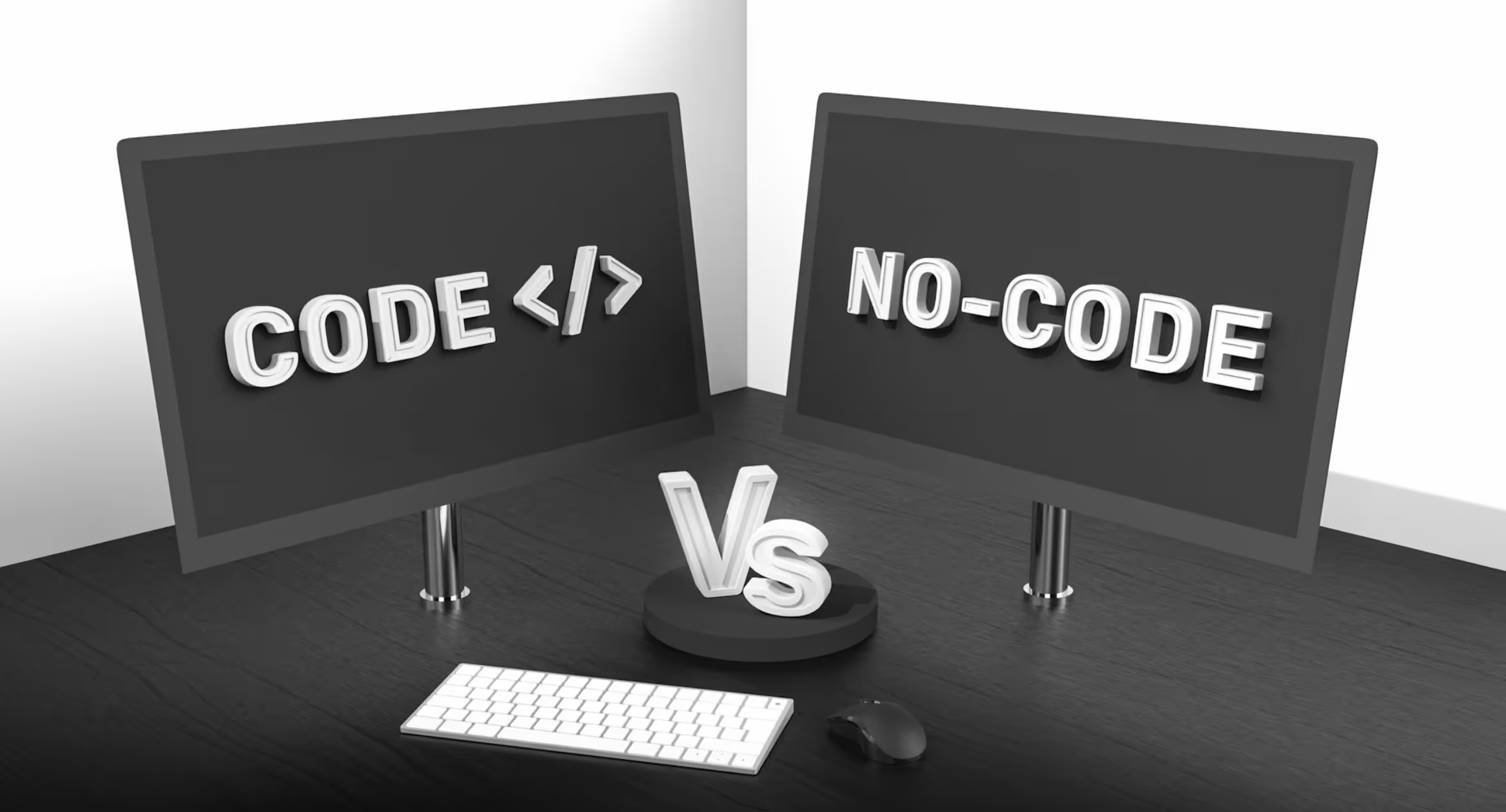
The way we build software is changing. Previously, it was a given that development required large teams of specialized developers, time-consuming coding, and long development cycles. Now, we see a different reality: AI, low-code, and no-code make it possible to develop solutions faster, cheaper, and with far fewer resources.
This doesn't mean developers are on their way out – quite the opposite. But it does mean that the way we develop software is fundamentally changing. Businesses are gaining more tools to develop their own solutions without relying on large IT departments, while developers can spend more time on strategic architecture, complex systems, and custom solutions where they are truly needed.
But what does this mean in practice? And how can both businesses and developers best leverage this development?
What are low-code and no-code, and why are they important?
For many years, software development has been a process requiring specialized knowledge. But no-code and low-code have turned this dynamic upside down.
No-code makes it possible to build apps and digital solutions without writing a single line of code. This is achieved through user-friendly drag-and-drop tools like Webflow, Bubble, and Zapier.
Low-code provides developers with ready-made building blocks that they can customize with code where needed. Platforms like Mendix, OutSystems, and Microsoft Power Platforms make it possible to create complex solutions much faster than with traditional coding.
A good example of this is Microsoft Power BI, which is part of the Microsoft Power Platform. It's a low-code platform for data analysis, where users can easily drag and drop visualizations, connect to various data sources to create interactive dashboards – without coding. At the same time, it's possible to create more advanced models with DAX and Power Query to customize calculations and transformations where needed.
For businesses, this means more employees can contribute to innovation and digitalization – without needing extensive technical expertise. For example, a marketing team can build a campaign platform in Webflow without waiting for the IT department, while an HR department can automate recruitment processes with Zapier.
If you run a business, low-code and no-code can be the fastest path to digital solutions. If you're a developer, it's time to look at how low-code and AI can make you more efficient. This doesn't mean you need to stop coding, but rather that you can automate more of the repetitive work and spend your time where it truly counts.

What does this look like in practice?
Let's look at some concrete examples:
Imagine a rapidly growing online store struggling to keep its website content updated. Product descriptions constantly need changing, campaigns must be entered manually, and developers spend a lot of time on minor adjustments that don't actually require coding.
Here, a solution like Sanity – a headless CMS – make a big difference. With Sanity, developers can set up a flexible content structure, while marketers and content producers can update the website without disturbing developers. The result? More efficient workflows, faster updates, and fewer bottlenecks.
Many finance departments face a similar challenge, where manual processes like exporting data to Excel and preparing various monthly reports consume a lot of time. By using Power BI, they can automate this process, connect to real-time data, and create visual dashboards – or simply automate the reports. This streamlines work and reduces the risk of errors.
How AI Enhances Development
Low-code and no-code aren't just about simplifying the development process – AI plays an increasingly significant role in how we build software. AI-generated code makes it possible to get suggestions for code snippets based on functionality descriptions. Tools like GitHub Copilot and ChatGPT can help developers write code faster and with fewer errors. Automated debugging helps developers find and fix errors before they become major problems, and intelligent automation allows platforms like Zapier to use AI to analyze workflows and suggest improvements.
Will Traditional Development Disappear?
No – but it will look different. We already see that development work in many companies is divided into three main levels:
No-code for quick solutions – Small businesses and non-technical teams can build simple apps and automations without developers.
Low-code for tailored solutions – Developers can use low-code platforms to build more advanced applications, but faster and with less code.
Full-code for complex systems – Larger businesses and tech-heavy companies will still need traditional development to build scalable, secure, and flexible systems.
What Does This Mean for You?
If you run a business, low-code and no-code can be the fastest path to digital solutions. This means you can launch new services faster, test ideas without major investments, and free up your IT team from simple tasks.
If you're a developer, it's time to look at how low-code and AI can make you more efficient. This doesn't mean you need to stop coding, but rather that you can automate more of the repetitive work and spend your time where it truly counts.
How Aboveit Can Help You 🚀
At Aboveit, we help businesses navigate the new development landscape. We have extensive experience with AI, low-code, no-code, and traditional development, and we know how you can leverage the right tools to create value quickly.
We can help you with:
• Low-code and AI Strategy – Which tools are best suited for your business?
• Development with Sanity – A powerful headless CMS that gives you flexibility and control.
• AI integration in the development process – Automation, code generation, and debugging with AI.
• Building low-code solutions – Efficient, scalable applications, for example, Power BI or other tools, that suit your needs.
... and much, much more! 💙
More updates

Sarah Serussi blir ny teamleder i Trondheim: – Hun forstår hvordan man bygger et team
Vi har gleden av å dele at Sarah Serussi er på plass som ny teamleder i Aboveit Trondheim.

Aboveit among Norway's best in the Norwegian Championship in AI 2026
Four Aboveit developers competed in the Norwegian Championship in AI 2026, and all four finished among the top 10% of 3,000 participants.

Dynamics 365 CE or custom-developed software – what's best?
Should you choose Dynamics 365 CE or build your own software? We at Aboveit share the pros and cons of both approaches – and advise on how to find the solution that provides the most value for your business.
From structure to flow
Are you running many initiatives but seeing little progress? With Flight Levels, you get clarity, focus, and improved flow – without implementing large frameworks. A practical approach to agile development for the entire organization.